
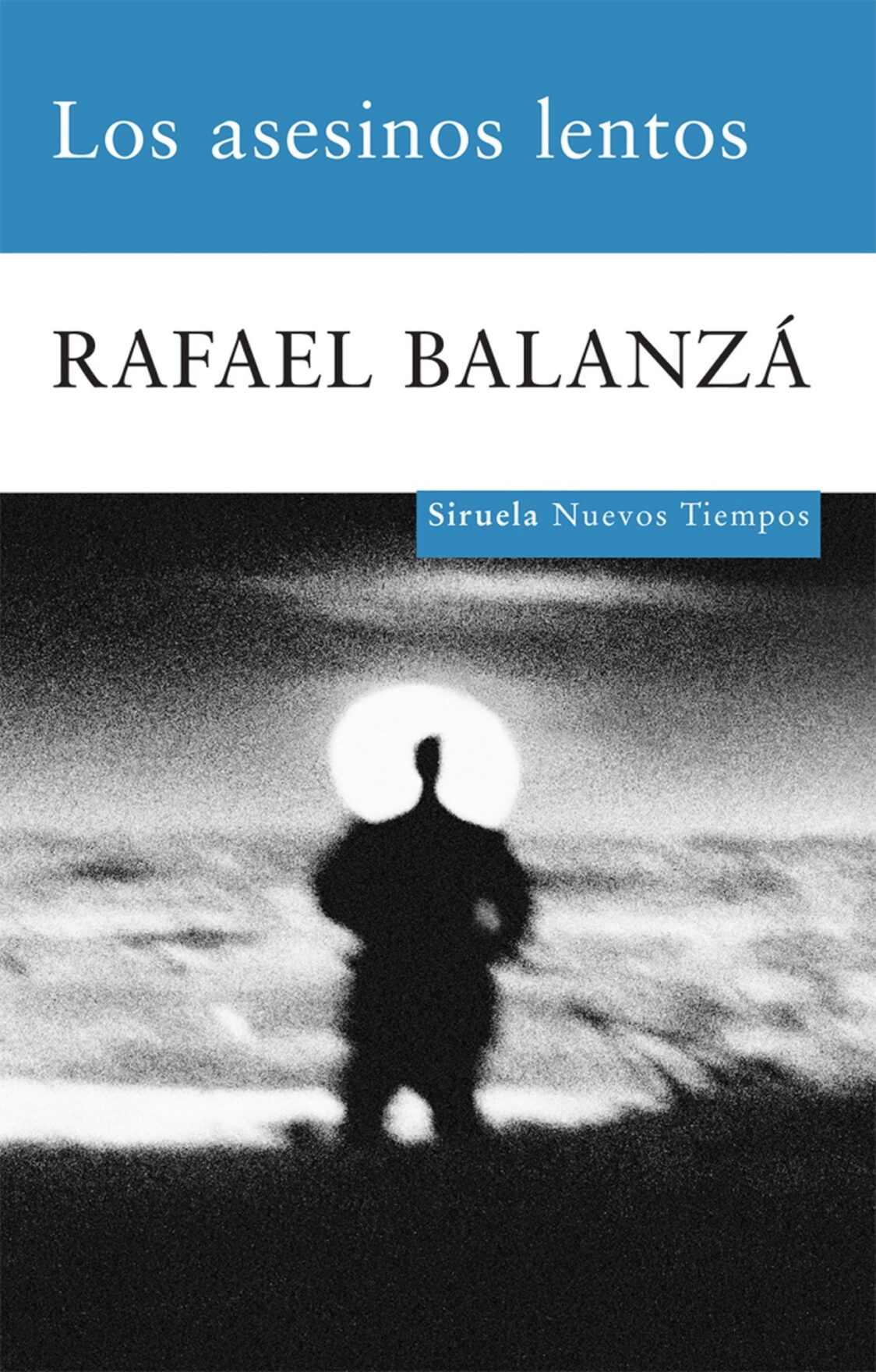
After ten years without seeing each other, Valle and Cáceres unexpectedly reunite in a café. They chat, reminisce about old stories, and laugh over memories from the past. Then Valle calmly informs his old friend that he intends to kill him soon, offering no explanation why. From that moment on, Cáceres must uncover what lies behind the threat and try to prevent a murder in which he himself is destined to be the victim.
Juan Cáceres leads what appears to be a stable life. He owns a pet shop in a shopping arcade, is married to Virginia, and has two teenage children. Everything changes when he receives an unexpected call from Valle, a former friend he has not seen in more than ten years. During a reunion marked by nostalgia and jokes about the past, Valle calmly informs him that he has decided to kill him.
The threat is as bewildering as it is disturbing. Valle is not motivated by revenge or by any recent conflict. Frustrated by a life he considers a failure and convinced that the world lacks both meaning and justice, he has concluded that he needs someone to blame for his misery. Juan, an old friend and romantic rival in a long-forgotten youthful episode, has become that chosen target. Valle also makes it clear that turning to the police will accomplish nothing, presenting Juan with only three options: disappear, convince him to abandon his plan, or strike first and kill him before he can act.
From that moment on, Juan tries to continue his life as normal, but the threat gradually contaminates every aspect of his existence. While attempting to determine whether Valle is serious or simply suffering from some form of delusion, his world becomes increasingly hostile. The new manager of the shopping arcade, Alberto Maños, a fervent animal rights activist, launches a campaign against his business through inspections, complaints, and endless bureaucratic obstacles that threaten to destroy years of work.
At the same time, Juan feels his family slipping away from him. His relationship with Virginia has become distant, his children seem increasingly like strangers, and those who once supported him begin drifting away. Every ordinary incident takes on an unsettling significance, feeding his growing sense that the world he once knew is beginning to fracture.
His recurring meetings with Valle only deepen his confusion. Far from behaving like a conventional killer, his former friend alternates philosophical reflections on guilt, resentment, and the meaning of existence with increasingly bizarre observations that are at once comical and terrifying. Between them emerges an unusual relationship, suspended somewhere between a rekindled friendship and an inevitable confrontation. Although Juan considers acting first, even hiding a knife during one of their meetings, he never finds the courage to cross that line.
When Alberto Maños dies in a traffic accident and the problems surrounding Juan’s business disappear almost overnight, he begins to believe that there may finally be a way out. Shortly afterward, an even more unexpected twist occurs: Valle claims to have undergone a profound religious conversion. After joining a Christian community, he insists that he has overcome the hatred that consumed him and asks Juan’s forgiveness for everything that happened.
By then, however, the damage has already been done. Months of living under constant threat have transformed Juan into a man incapable of trusting anyone and inclined to interpret every gesture as a warning sign. The discovery of a relationship between Virginia and his friend Francisco pushes him even further into despair. Convinced that he has lost his family and that the threat still lingers, he sinks into a spiral of suspicion and resentment.
Days later, he waits outside the religious congregation Valle now attends. When he sees him approaching with a dark object in his hand, he believes the long-promised moment has finally arrived. Overcome by panic, he accelerates his car and runs him down. Only when he approaches the body does he realize the tragedy of what he has done: Valle was not carrying a weapon, but a copy of the New Testament he intended to give him as a gift. He dies forgiving him.
Convicted of murder, Juan recounts the entire story from prison and entrusts it to the prison chaplain. There he finally understands the cruel irony that has defined his fate: while trying to escape an unlikely threat, he became the executioner of the one person who, in the end, had abandoned any intention of harming him. What began as a macabre joke between two old friends evolves into a tragedy shaped by dark humor, chance, guilt, and the fragility of the certainties upon which we build our lives.
RELEVANT INFORMATION: Rafael González Balanzá is a Spanish author of crime fiction and thrillers. Alongside his work as a novelist, he founded and published El Kraken magazine in 2002, a respected publication among crime and mystery literature enthusiasts.
Slow Killers, his debut novel and winner of the 2009 Café Gijón Prize, is a highly original crime novel that derives its narrative strength from an extraordinarily precise suspense mechanism. Its solid dramatic structure moves naturally toward an ingenious and unexpected conclusion. The central premise generates constant tension throughout the narrative and immediately evokes the great psychological intrigues of Alfred Hitchcock, where fear, uncertainty, and subjective perception are far more decisive than violence itself. This combination of psychological thriller and tragedy gives the novel considerable audiovisual potential.
AUDIOVISUAL POTENTIAL: TV Series, Limited Series, Feature Film, TV Film.
AVAILABLE LANGUAGES: Spanish, Italian.
AUDIOVISUAL POTENTIAL: TV Movie, Movie, TV Series, Miniseries
AVAILABLE LANGUAGES: Español, Italiano, Turco.
Adquirir los derechos
Para ponerte en contacto con nosotros completa el siguiente formulario y te responderemos en breve.
